
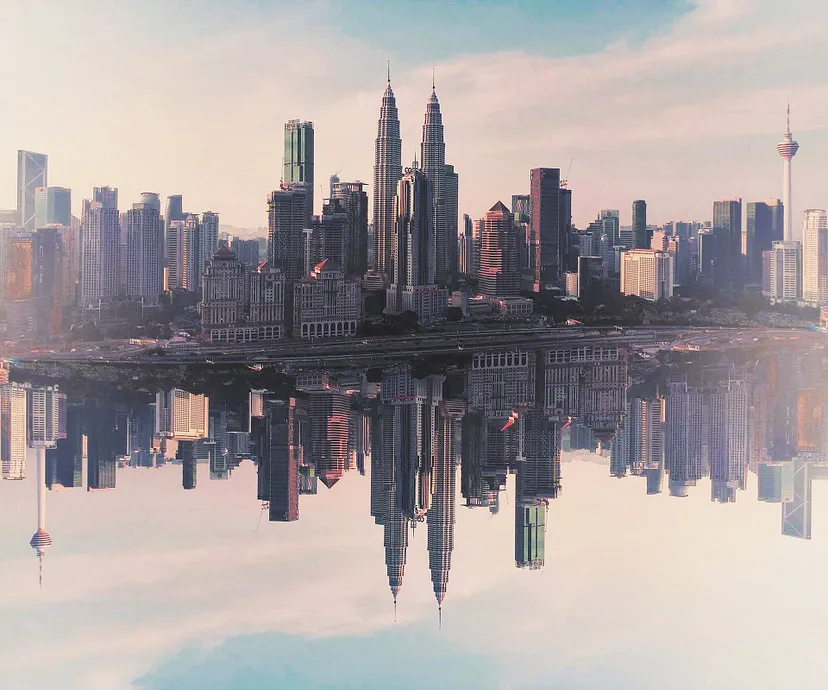
Once upon a time, KLCC was a turf club — Literally horses were running around back then. Likewise, Pavilion was once a girl school; Sungei Wang was once a Fun Fair; TRX was once a mixed Factory and Bungalow area. All these drastic change of an area involves big effort both politically and economically.
For this article, we shall refer big scale development like KLCC as “Blue Print Development”. These are the developments which are usually worth billions, and government intervention is involved and is build for a purpose of exploring and expanding economic income stream for a nation.
These developments have brought the nation’s economy to a new level. Particularly KLCC, initiated by Tun Dr. Mahathir who is the Prime Minister at that time, have nurtured the business landscape of oil & gas, import & export etc. It was that period that Malaysia had attracted many Multi National Companies (MNCs) doing business here.
Despite the success of KLCC as the economy catalyst which had far exceed the cost of building it, people back then were against it and deem it as “excessive”.
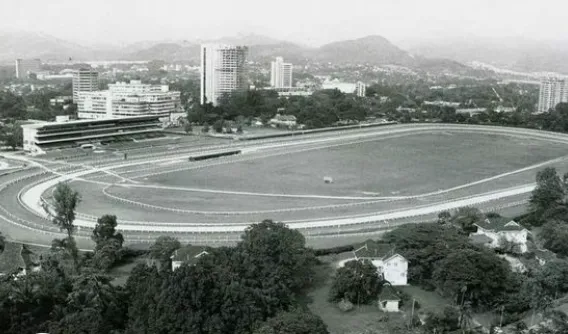
Selangor Turf Club, exactly where Petronas Twin Tower stands now
Well to be honest, it is a very common thing to hear from people in regards to how they feel about future developments. Often we would hear people complain about political instability, economically excessive, oversupply of properties, pricing is too high… and the list goes on.
This article is a simple write up to debunk the development myth- we gonna talk about what exactly is Urban Development.
Think of it as a process — How human lived in caves as shelter back then had transformed into new way of living in Modern days. People now living in nice condos & houses, with MRT to commute, and have office space to work with. If you try to think about it, actually the main ingredients for economic advance are namely infrastructures and properties.
In other words, economies cant grow effectively without development takes place.
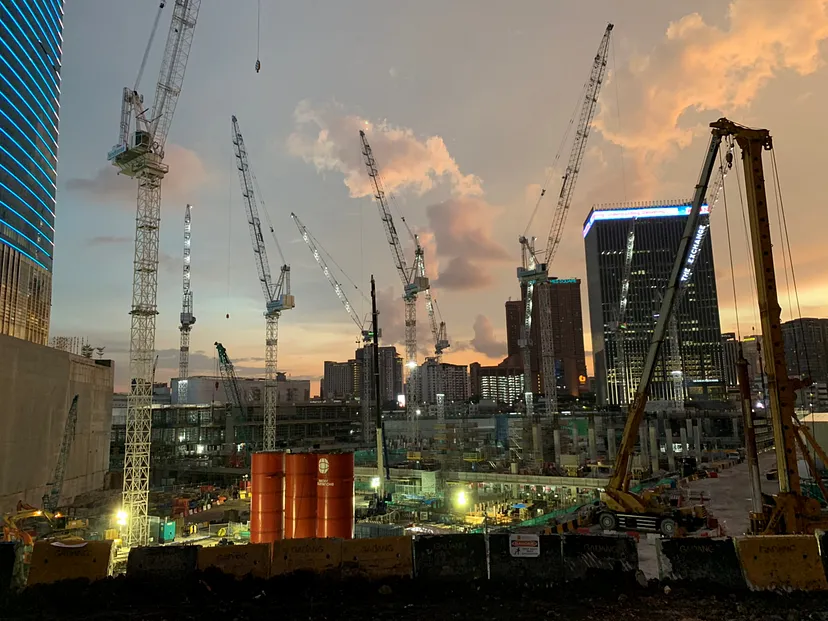
Construction site of TRX, and a beautiful sky
In future articles we will discuss more on what will be the hotspot for us to invest in city centre of KL.
Here is a timeline of KL having the big scale blueprint developments:
Early 1980’s to Late 1990’s — KLCC as international trade and oil & gas hub
Early 1990’s to Early 2000’s — Bukit Bintang as Entertainment & Shopping District (Cuti-Cuti Malaysia)
Early 2010’s to Current Times — TRX as International Islamic Financial Hub
Early 2010’s to Current Times — Bandar Malaysia as Transportation Hub (which we going to talk more about the possibility on HSR in future articles)
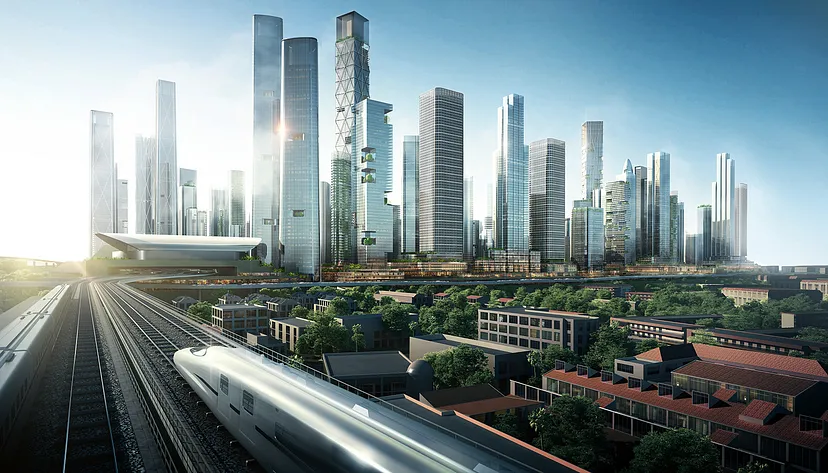
Bandar Malaysia Master Plan Artist Impression, Looks Canggih giler
When we say development equals to economic growth, it is not without its logic. If I were to make up a math equation for the sake of easy understanding, it would look something like:
[Property Space x Infrastructure] / Time Needed = Economic Growth
Let me explain.
Economic Growth is defined by growth in Gross Domestic Product (GDP), year by year. GDP is also a measure of productivity, which also means business outputs & transactions.
All forms of business operations, outputs, managements needs space. You need a work desk (even work from home or online business), an office meeting room for discussion, a factory for production etc., and when you mention “Space”, it is Property.
Reducing time wasted on travelling to work will in turn ensure more time being used to enhance productivity of work, this is the role of infrastructure like MRT & LRT acts for. They do not just reduce traffic congestion but also enabling work force to commute efficiently.
But in order for a development to realize its potential and economic benefits, it definitely needs time! A realistic expectation is to always assume that once these Blue Print Mega Projects are ready, there will always be a period of oversupply — aint no building gonna fill itself up with companies and workers immediately at first day of launch, right?
Just like what we mentioned about Urban Development is a process, maturity of these Blueprint Development needs to undergo a process of supply of new “Space”, completion of infrastructure, attracting tenants and businesses, spending and usage occurs…. all these definitely takes time!
Hope this article gives you a picture of what Blueprint Developments are and how should we look at it as a whole. In continuation of this topic, I shall write more about what is up next for our KL’s Blueprint Development in next 5 or 10 years.
Its 2AM now as of finishing this and my good cup of Kluang black coffee. Its time for bed, Good night!