
Brandon Goh has 7 years of experience in Real Estate, and professionally served numerous listed companies and high net worth individuals.
Article of podcast: Property Price vs. Property Value
Hi all! It is me, Brandon and today we are going to talk about the fundamental difference between property price and property value. Let’s dive right into it

[Audio podcast version of the article available at BrandonGoProperty Soundcloud]
To illustrate and let us all understand the fundamental differences on what sets apart property prices and value, we are going to use an example:
Let’s say we found an apartment that sells for RM500,000 but it is valued for RM600,000 in the sub-sale market (secondary market). For which the former figure (RM500,000) is what the owner wants to get by selling it, and the latter figure (RM600,000) is what property valuers told on how much the apartment is worth, that would serve as a reference for banks for mortgage later on.
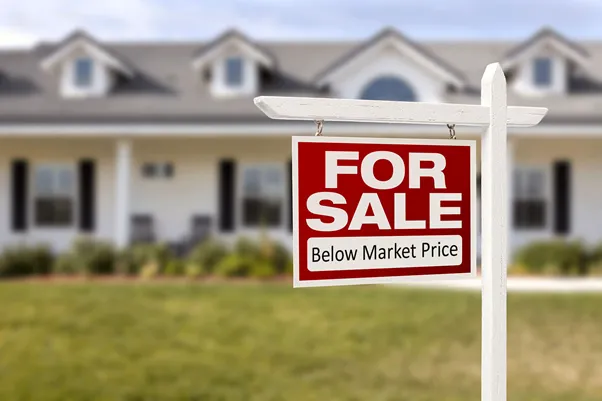
Getting a deal like this is considered a below market value deal.
Though it sounds like good news, but the reason why am I bringing this up for the discussion is that there are too many deals out there that sounds too good to be true and perhaps, it is just a trap that lures inexperienced investors into it.
There are many, many entry level investors are blindly seeking the so call “cheap” deals, where they are too focus centric on just the price itself, which creates themselves a “blind spot”.
Because cheap is not necessarily good, what we would need to pay attention to is the economic value of the property, a few questions to ask:
#1 Does it have an attractive potential capital appreciation?
— Do you have the confidence that the property price could go high enough to make you money in 5 or 10 years?
— Does the property face any downside risk of price dropping lower, or being stagnant?
— Have you done data studies that shows potential capital gains from recent transaction records, that will economically and factually justify the capital gain projection down the road?
#2 Will the property fetch steady returns on rental occupancy?
— Is the occupancy rate convincing enough to have steady stream of rental collection?
— Is the demographic around the area capable of paying such rental?
— Will rental increment be likely possible with the surrounding alternative choices?
It is important to be on the offense while seeking opportunity in the market to invest, but it is always not a bad thing to be strict on our choices. The art lies in how to strike a balance in it.

Let’s take a simple example:
Bill bought a very cheap apartment that is way under market value. While not knowing the downside risk, one might get into trouble of selling it for an earning in capital gain; nor having stable tenant that pays monthly rental on time.
Though Bill owned a property with a good price, but because its usefulness and attractiveness in the market is not sufficient to support the ease of liquidating the property, or providing positive cashflow from rental collection, he is probably stuck with a debt that doesn’t make his wealth any better off.
That is all for today, hopefully this article reminds another mindful reader to be always on the safe side, and be wise in homebuying decisions. Take care and see you in the next one!
Cheers.
Regards,
Brandon Goh
Senior Manager
Landspace Realty Sdn Bhd